

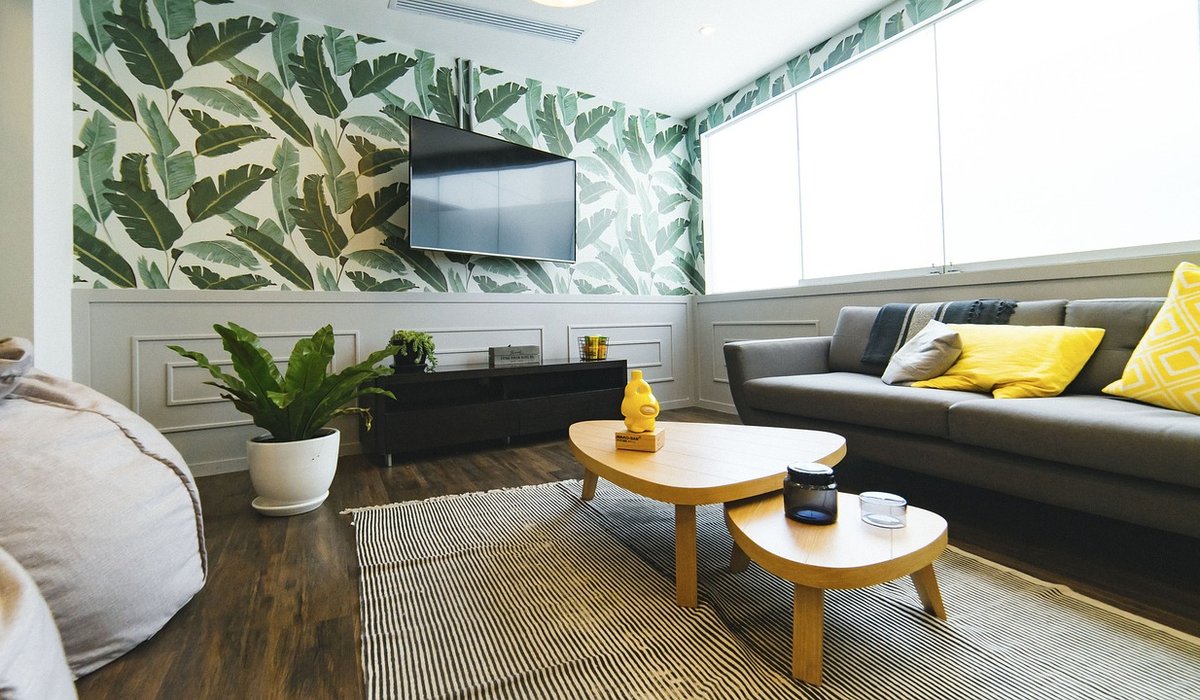
Neutrals have a reputation for being safe, and safe has a habit of sliding into flat. In a small living room, the temptation is to choose one inoffensive shade and hope for the best — but that usually produces a space that feels either clinical or just plain unfinished. The trick is not to find one perfect colour. It is to layer several, keeping them in the same warm family and letting texture carry the contrast. Build a room from warm whites, oatmeals and soft browns and you get calm with depth, quiet without emptiness.
Why neutrals suit small rooms so well
A neutral scheme works harder in a small room than a bold one. When the walls, ceiling, floor and furniture sit within a narrow range of tones, the eye stops noticing where each surface begins and ends. Corners soften, the ceiling recedes and the whole room reads as one continuous envelope rather than a box with furniture pushed into it.
Neutrals are also forgiving of the visual noise small rooms collect — the router, the stack of post, the dog basket. But be careful which neutrals you mix. A cool grey-white beside a warm beige will look like a mistake rather than a decision. Stay inside one temperature: if your white is creamy, your oatmeal should be creamy too.
Start with a warm white on walls and ceiling
Warm whites have a touch of yellow, pink or cream in them rather than blue or grey. That matters in the UK, where grey daylight can turn a cool white distinctly chilly on a north-facing wall.
- Choose a chalky, matt finish — it hides the lumps and bumps of older plaster far better than anything with sheen.
- Paint the ceiling and woodwork in the same shade as the walls, or one step lighter, so the corners dissolve.
- Buy testers in at least three shades and paint A2-sized patches on two different walls. Live with them for a week, checking them in the morning and again under lamplight.
- Write the shade name and finish down somewhere. You will want it for touch-ups.
Bridge the scheme with oatmeal, stone and mushroom
These mid-tones do the structural work. They are your sofa, your rug, your curtains — the large textiles that fill most of the visual space. Keep them within two or three steps of your wall colour, so the eye travels across the room rather than stopping dead.
An oatmeal sofa against a warm white wall, for example, gives you definition without drama. A mushroom rug under a stone-coloured armchair builds a sense of progression. Start with the biggest item you already own and pull the rest towards it, rather than the other way round. And do resist the cool greys here; beside warm whites they will always looked slightly grubby.
Anchor everything with soft browns
Brown is the tone that saves a neutral room from being insipid. Without it, warm whites and oatmeals can drift into blandness. Use it low down and in small quantities.
- Cognac, tan and walnut for wood — a coffee table, a picture frame, a lamp base.
- Clay and terracotta for a warmer, earthier note — a ceramic vase, a plant pot.
- Deep chocolate in tiny doses — a cushion edge, a leather strap, a handle.
A useful rule: brown should appear in three or four places, not one. A single brown object looks accidental; three look intentional. If you are mixing woods, keep them in one family — oak with ash, or walnut with mahogany — so they read as a collection rather than a jumble.
Let texture carry the contrast
When colour contrast is low, texture has to take over. This is where a neutral room either becomes genuinely cosy or quietly dull.
- Chunky wool — a heavy throw over the arm of a sofa.
- Boucle and sheepskin — a cushion or a seat pad, something you want to touch.
- Linen and cotton slub — curtains that filter light rather than block it.
- Jute, rattan and aged brass — floor level and small detailing.
- Corduroy and matt velvet — a cushion in a deeper oatmeal or soft brown.
Contrast the scale of the weaves: a chunky knit next to a fine linen, a nubby rug beneath a smooth plaster wall. Aim for at least three different textures in any sightline. In a small room, put the chunkiest texture on the largest surface and keep the smaller pieces finer, so nothing feels crowded.
Layer the light, then layer the room slowly
Neutrals change hour by hour, which is part of their charm. Help them along with pools of warm light rather than one overhead source. Lamps at three heights — a floor lamp, a table lamp, a small light on a shelf — fill the corners and make the room feel bigger after dark. Warm bulbs and dimmable switches are worth the extra few pounds, and a linen or paper shade softens the glare beautifully.
Finally, resist buying the whole scheme in one weekend. A living room layered over a year looks collected; one assembled in an afternoon looks like a showroom. Add a cushion, then a basket, then a secondhand lamp base you spotted in a charity shop. Note what you have chosen as you go, so the next addition still belongs. That slow accumulation is what turns a neutral room from a colour scheme into somewhere you actually want to sit.


Coding is used in almost all aspects of life and work now, be it directly or indirectly. It’s not just for companies in the tech sector. “An increasing number of businesses rely on computer code,
Coding is used in almost all aspects of life and work now, be it directly or indirectly. It’s not just for companies in the tech sector. “An increasing number of businesses rely on computer code,
Coding is used in almost all aspects of life and work now, be it directly or indirectly. It’s not just for companies in the tech sector. “An increasing number of businesses rely on computer code,