

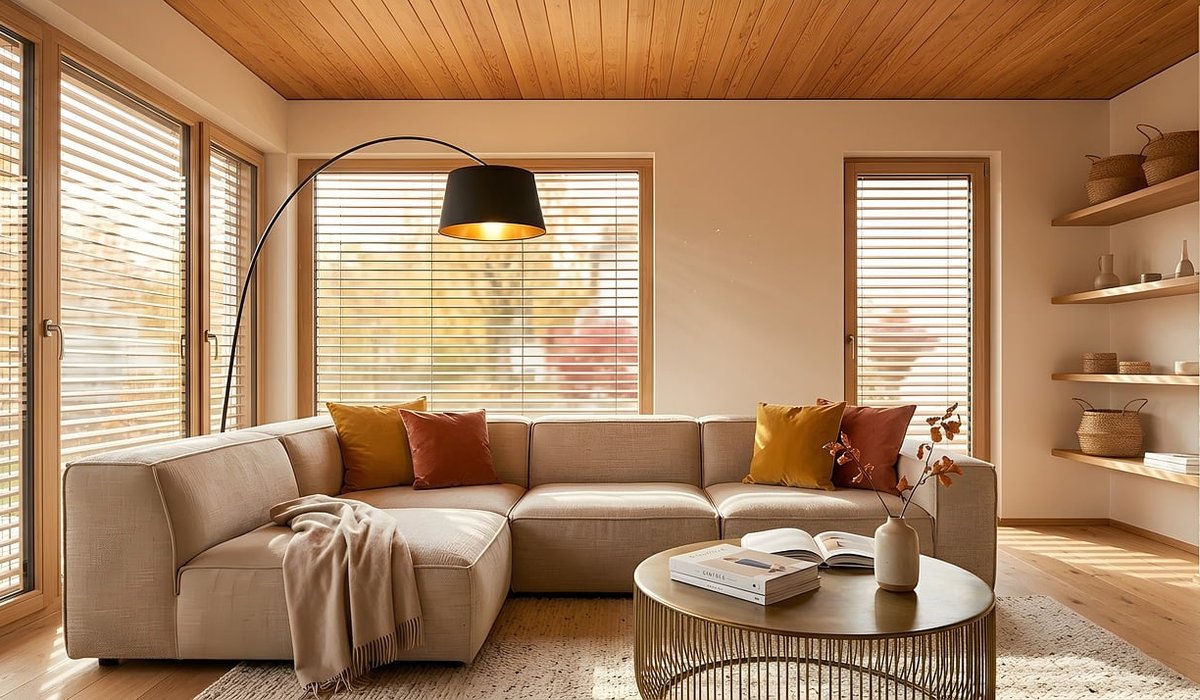
A tiny bedroom can be one of the most restful rooms in the house, or it can feel like a storage cupboard you happen to sleep in. The difference rarely comes down to square footage. It comes down to what you put in the room, where you put it, and how much visual noise you allow to build up. If your bedroom doubles as an office, a dressing room or a laundry drying space, calm can feel out of reach. With a few deliberate choices, though, even a box room can become somewhere you genuinely look forward to winding down in.
Start With a Soft, Low-Contrast Palette
Small rooms tend to feel busier because every surface is close to you. Strong patterns, dark feature walls and high-contrast colour schemes make the walls feel nearer still. A gentler approach is to choose two or three closely related shades and let them run through the whole room.
Think warm off-whites, soft clay, pale oatmeal, muted sage or dusty grey-blue. These colours bounce light around without feeling cold. If you want a little depth, paint the wall behind the bed in a slightly deeper tone of the same shade rather than introducing a completely different colour.
- Keep the ceiling and skirting the same colour as the walls to blur the edges of the room.
- Choose paint with a matt or chalky finish — it softens shadows far better than gloss.
- Repeat the same two or three colours in bedding, curtains and a rug so nothing jars.
- Avoid stark white bedding against dark walls if you want the room to feel cocooning rather than clinical.
Keep Furniture Low and Leggy
Height is the enemy of a small bedroom. A tall wardrobe or a chunky bed frame can make a compact space feel top-heavy and cramped. Low furniture lets the eye travel across the room instead of stopping abruptly at a wall of cabinetry.
Where you can, choose pieces that sit close to the floor and leave visible floor space beneath them. A bed on slim legs, a low bedside table, a shallow chest of drawers at waist height — these all read as lighter than solid blocks. If your ceiling is low, this matters even more.
Consider a divan base only if storage is desperate. Otherwise, a simple wooden or metal frame with space underneath gives you somewhere to slide flat boxes or a folded spare duvet, and it stops the bed from dominating the room.
Hide the Clutter Behind Closed Doors
Clutter is the single biggest thief of calm in a small bedroom. The trick is not to be tidier — it is to remove the need to see your things at all. Open shelving looks lovely in photographs, but in a compact room it simply adds visual weight.
- Choose a wardrobe with solid doors rather than glass or open rails.
- Use lidded storage baskets under the bed for off-season clothing and spare bedding.
- Add a shallow, wall-mounted cabinet with doors for books, chargers and bedside bits.
- Keep a single lidded box for odds and ends and give it a home on top of the wardrobe.
- Route cables behind furniture and use a fabric cable tidy so trailing leads disappear.
The aim is that when you walk in at night, your eye lands on calm surfaces rather than a to-do list of objects. If everything has a closed door in front of it, the room instantly feels quieter.
Layer Light Instead of Flooding the Room
One harsh ceiling light in a small bedroom is unforgiving. It flattens the space and makes every corner look sharp. Layered lighting, on the other hand, lets you dial the room down as the evening goes on.
Start with a warm ceiling fitting on a dimmer if you can, then add a bedside lamp with a fabric shade and a small floor or wall light in the opposite corner. Bulbs around 2700K give a soft, golden glow that flatters a tight space far more than cool white.
For the windows, choose a curtain in a similar tone to the walls and hang it as close to the ceiling and as wide as possible. This draws the eye upwards and makes the window feel larger than it is. A blackout lining is worth the extra cost if you are sensitive to early summer light.
Use Mirrors and Texture With Restraint
A well-placed mirror genuinely does make a small room feel bigger, particularly if it faces a window and reflects daylight back into the room. One good mirror is enough. Two or three starts to feel like a dressing room.
Texture is what stops a small, low-contrast room from feeling flat. Add it through a chunky knit throw, a linen headboard, a wool rug beside the bed or a woven basket. Keep the textures natural and matte — shiny finishes reflect light in a way that can feel restless in a bedroom.
Finally, be strict about what else earns a place in the room. A single framed print, a small plant, a candle and a book are plenty. In a tiny bedroom, every object is noticeable, so let each one be something you actually like looking at. Do that, and the room will feel calmer the moment you step inside.


Coding is used in almost all aspects of life and work now, be it directly or indirectly. It’s not just for companies in the tech sector. “An increasing number of businesses rely on computer code,
Coding is used in almost all aspects of life and work now, be it directly or indirectly. It’s not just for companies in the tech sector. “An increasing number of businesses rely on computer code,
Coding is used in almost all aspects of life and work now, be it directly or indirectly. It’s not just for companies in the tech sector. “An increasing number of businesses rely on computer code,